The brief
Create an inspection orientation with one real metalworking establishing shot and eighteen seconds of independent original surface motion. Let a light line trace the curved metal-like object so viewers can follow which area is being considered, without inventing results or replacing an actual inspection procedure.
Audience: training teams, technical reviewers and process owners creating a concise industrial quality inspection and surface review film.
The visual approach
00–06s: A steel component sits beneath a machining tool. 06–12s: An original reflective curved surface turns gently as a cyan line travels across its upper area. 12–18s: The independent illustration follows the light over the central surface; no measurement or defect is shown. 18–24s: The original light sweep continues over the curved object while the surrounding scene remains visible.
The mechanical composition uses a 100 BPM rhythm selected for this storyboard. On-screen words stay short so the industrial quality inspection and surface review imagery carries the sequence.
Review and editable scope
A real production brief would keep the industrial quality inspection and surface review subject, source attribution, exact narration and caption wording available for review. A subject specialist must approve the factual explanation before using it in a real lesson.
The studio production plan keeps the four shot selections, crop, title, narration, captions and sound design separate. These notes document how this authored film was made. Use the Martius feature documentation for the product editing and review workflow.
Sources and interpretation
The opening machining footage is licensed illustrative stock, not a validated inspection. The curved surface, traveling light and sensor-like housing are original schematic motion design. They do not model a specified metrology system, acquire measurement data or demonstrate a defect. No tolerance, pass/fail rule, measured scan, quality decision or certification is invented.
The linked NIST: conformity assessment and inspection resource supports the conceptual topic. Stock subjects are illustrative and are not Martius customers, endorsements or evidence of a named facility’s practices. Original illustration is marked as conceptual wherever its appearance could be confused with observed data.
Scene-by-scene transcript
00–06s — A steel component sits beneath a machining tool. On-screen text: Establish the part.. Narration: Inspection asks a defined question about a specific part. Original stereo score.
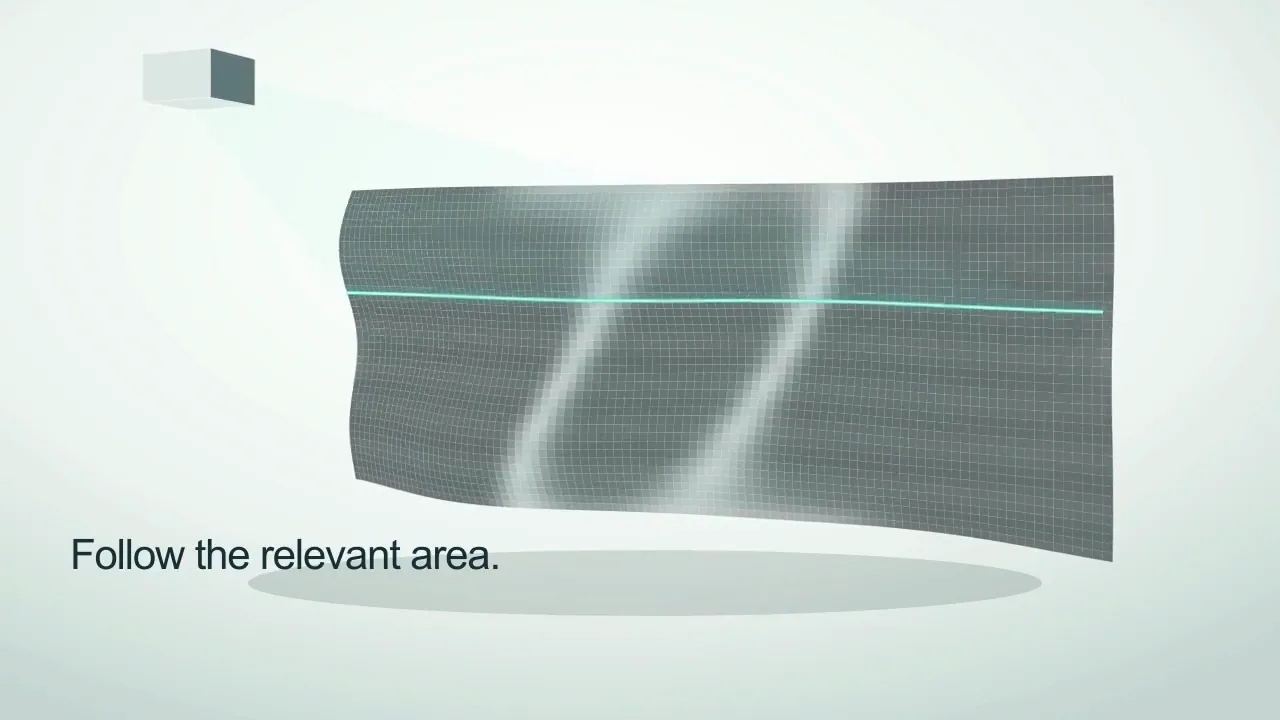
06–12s — An original reflective curved surface turns gently as a cyan line travels across its upper area. On-screen text: Follow the relevant area.. Narration: A useful view keeps the relevant surface visible. Original stereo score.
12–18s — The independent illustration follows the light over the central surface; no measurement or defect is shown. On-screen text: A view still needs criteria.. Narration: The review needs defined criteria beyond the visible scene. Original stereo score.
18–24s — The original light sweep continues over the curved object while the surrounding scene remains visible. On-screen text: Keep the record connected.. Narration: The record connects the part, criteria and review decision. Original stereo score.
Words, sound and scene notes
- 00:00
- A steel component sits beneath a machining tool. On-screen text: Establish the part.. Narration: Inspection asks a defined question about a specific part. Original stereo score.
- 00:06
- An original reflective curved surface turns gently as a cyan line travels across its upper area. On-screen text: Follow the relevant area.. Narration: A useful view keeps the relevant surface visible. Original stereo score.
- 00:12
- The independent illustration follows the light over the central surface; no measurement or defect is shown. On-screen text: A view still needs criteria.. Narration: The review needs defined criteria beyond the visible scene. Original stereo score.
- 00:18
- The original light sweep continues over the curved object while the surrounding scene remains visible. On-screen text: Keep the record connected.. Narration: The record connects the part, criteria and review decision. Original stereo score.