The brief
Move between vessel, container and crane views to explain how the physical load and its operational context travel through a port.
Audience: training teams, technical reviewers and process owners creating a concise port logistics and cargo handoffs film.
The visual approach
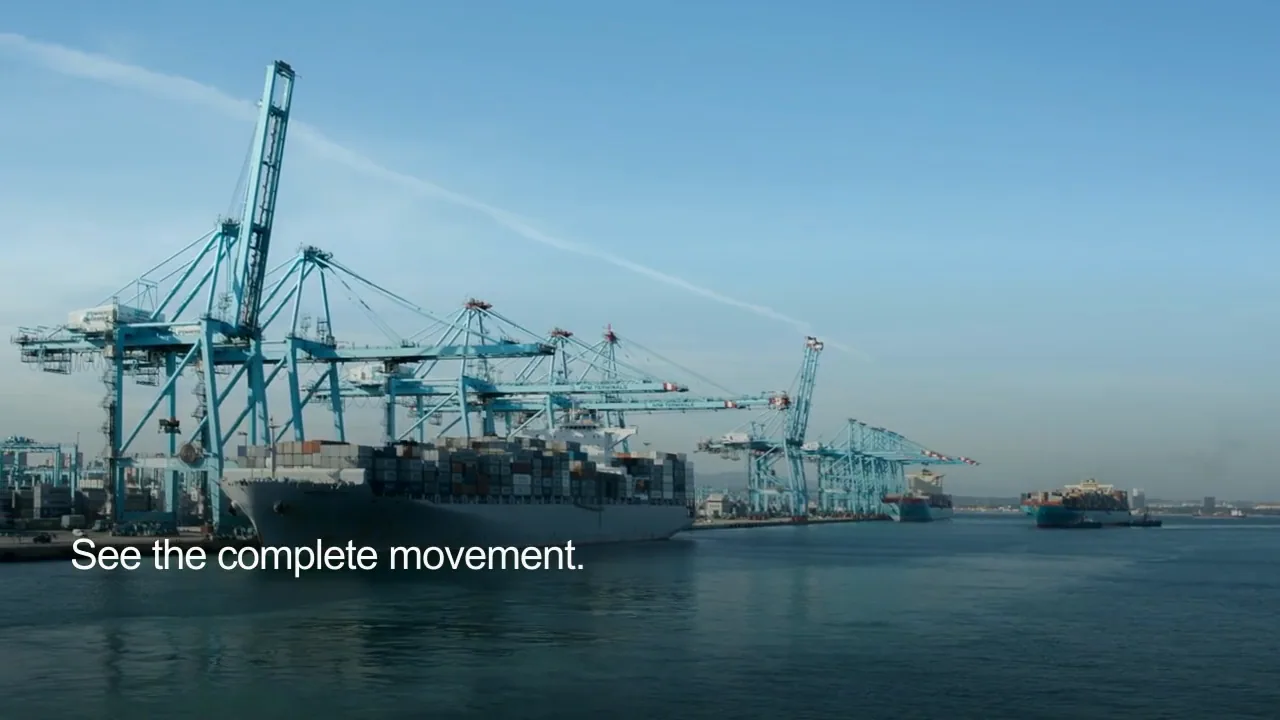
00–06s: A port crane moves over an industrial cargo area. 06–12s: A closer vessel view reveals stacked containers and the ship’s bridge. 12–18s: A red port-crane view shows cargo-handling movement around a container ship. 18–24s: A broader vessel view reconnects the cargo detail with maritime scale.
The pulse composition uses a 102 BPM rhythm selected for this storyboard. On-screen words stay short so the port logistics and cargo handoffs imagery carries the sequence.
Review and editable scope
A real production brief would keep the port logistics and cargo handoffs subject, source attribution, exact narration and caption wording available for review. A subject specialist must approve the factual explanation before using it in a real lesson.
The studio production plan keeps the four shot selections, crop, title, narration, captions and sound design separate. These notes document how this authored film was made. Use the Martius feature documentation for the product editing and review workflow.
Sources and interpretation
Licensed cargo footage is illustrative and does not follow one documented shipment. It does not show a named operator, current port procedure, load rating, cargo manifest or safe lifting instruction. Visible shipping brands are stock scene details and do not endorse Martius.
The linked U.S. Maritime Administration: port transportation systems resource supports the conceptual topic. Stock subjects are illustrative and are not Martius customers, endorsements or evidence of a named facility’s practices. Original illustration is marked as conceptual wherever its appearance could be confused with observed data.
Scene-by-scene transcript
00–06s — A port crane moves over an industrial cargo area. On-screen text: See the complete movement.. Narration: Cargo arrives, moves through the port and leaves. Original stereo score.
06–12s — A closer vessel view reveals stacked containers and the ship’s bridge. On-screen text: Identify the work in view.. Narration: Each transfer connects the load to another team. Original stereo score.
12–18s — A red port-crane view shows cargo-handling movement around a container ship. On-screen text: Carry the information forward.. Narration: The load and its information need to travel together. Original stereo score.
18–24s — A broader vessel view reconnects the cargo detail with maritime scale. On-screen text: A handoff starts the next task.. Narration: A complete handoff carries the operational context forward. Original stereo score.
Words, sound and scene notes
- 00:00
- A port crane moves over an industrial cargo area. On-screen text: See the complete movement.. Narration: Cargo arrives, moves through the port and leaves. Original stereo score.
- 00:06
- A closer vessel view reveals stacked containers and the ship’s bridge. On-screen text: Identify the work in view.. Narration: Each transfer connects the load to another team. Original stereo score.
- 00:12
- A red port-crane view shows cargo-handling movement around a container ship. On-screen text: Carry the information forward.. Narration: The load and its information need to travel together. Original stereo score.
- 00:18
- A broader vessel view reconnects the cargo detail with maritime scale. On-screen text: A handoff starts the next task.. Narration: A complete handoff carries the operational context forward. Original stereo score.