The brief
Help a logistics buyer see where responsibility changes. The film uses the physical container as a continuous subject while distinguishing the vessel, crane, and onward movement.
Scene sequence and accessible transcript
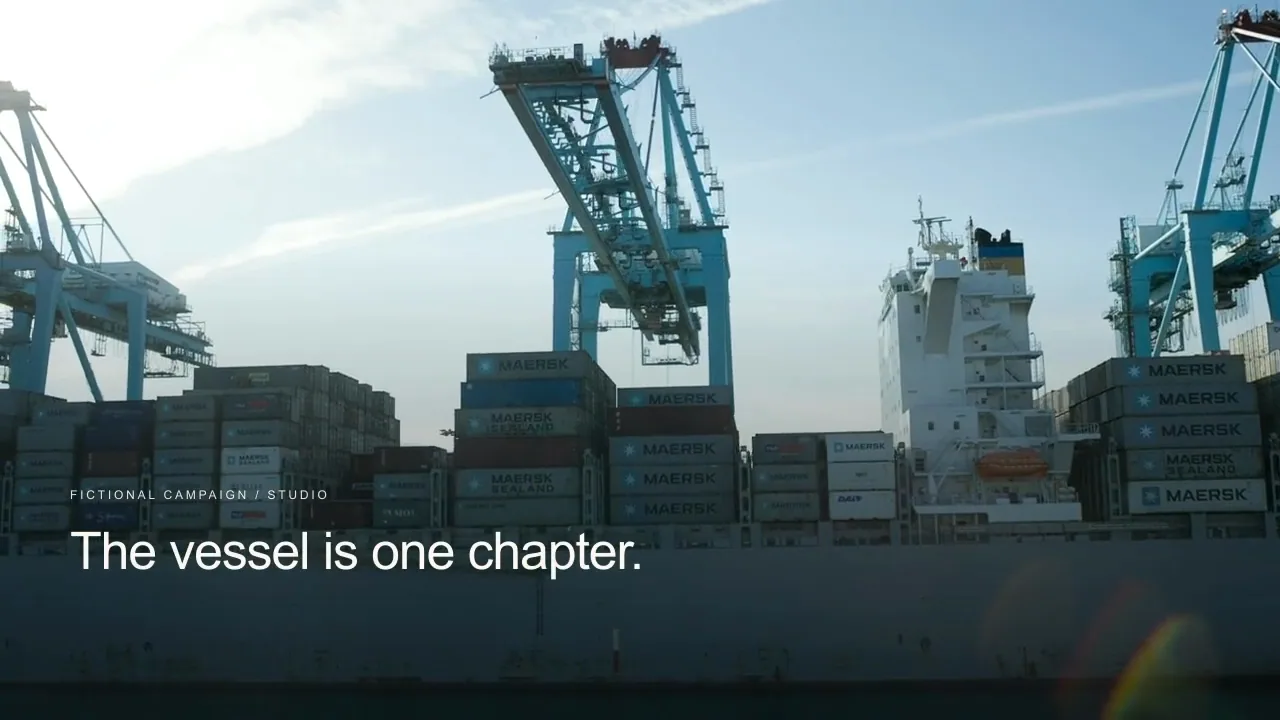
0:00–0:06 — A cargo vessel carries stacked containers. On-screen: “The vessel is one chapter.”. Spoken: “The ship carries the cargo. The journey keeps going.”
0:06–0:12 — Dockside cranes perform unloading work. On-screen: “The handoff is the story.”. Spoken: “At the crane, responsibility moves with the container.”
0:12–0:18 — An original crane moves a container from vessel to a waiting vehicle. On-screen: “One container. Clear roles.”. Spoken: “One container connects the vessel, the lift, and onward movement.”
0:18–0:24 — Workers move containers in a port. On-screen: “Define the next milestone.”. Spoken: “Clear milestones make the next handoff a better conversation.”
What the film does and does not establish
Stock scenes are from different operations. The animated handoff is conceptual; it does not show one tracked shipment, actual terminal software, throughput, dwell-time savings, or a promised service level.
Keep the business information reviewable
Keep milestone definitions, operator roles, location names, and commercial terms tied to the approved service brief. Change these facts without replacing the entire visual story.
Production and source
This is a complete authored studio film with four independently sequenced scenes, original narration, a film-specific score, and captions. The film is a fictional campaign concept rather than a customer case or a Martius product execution recording.
Real stock shots and original simplified illustrations are explicitly distinguished. Raw source footage stays in private production directories; only the edited film, poster, and captions are published.
Words, sound and scene notes
- 00:00
- The ship carries the cargo. The journey keeps going. [Visual: A cargo vessel carries stacked containers. Original instrumental score.]
- 00:06
- At the crane, responsibility moves with the container. [Visual: Dockside cranes perform unloading work. Original instrumental score.]
- 00:12
- One container connects the vessel, the lift, and onward movement. [Visual: An original crane moves a container from vessel to a waiting vehicle. Original instrumental score.]
- 00:18
- Clear milestones make the next handoff a better conversation. [Visual: Workers move containers in a port. Original instrumental score.]