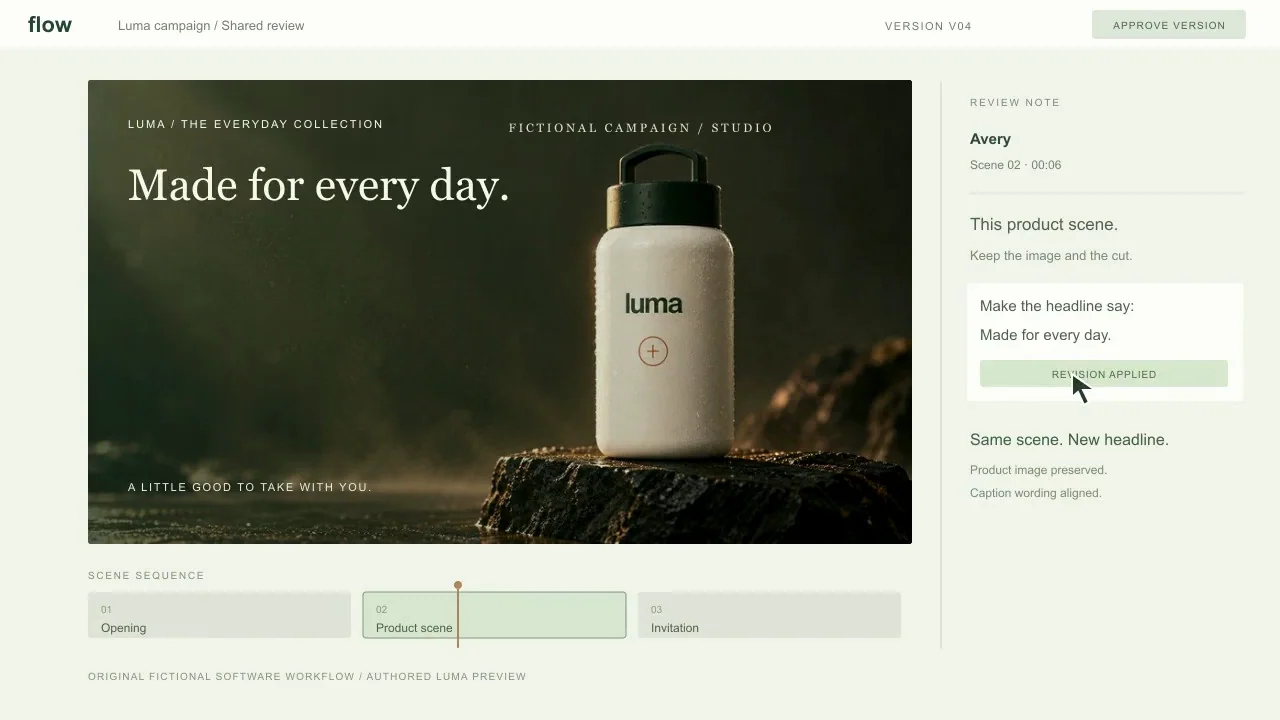
A software walkthrough concept follows a scene selection, one headline revision, and an approved handoff inside an original moving review interface.
Martius studio · Authored showcase
Video review software
Choose the relationship the audience needs to see
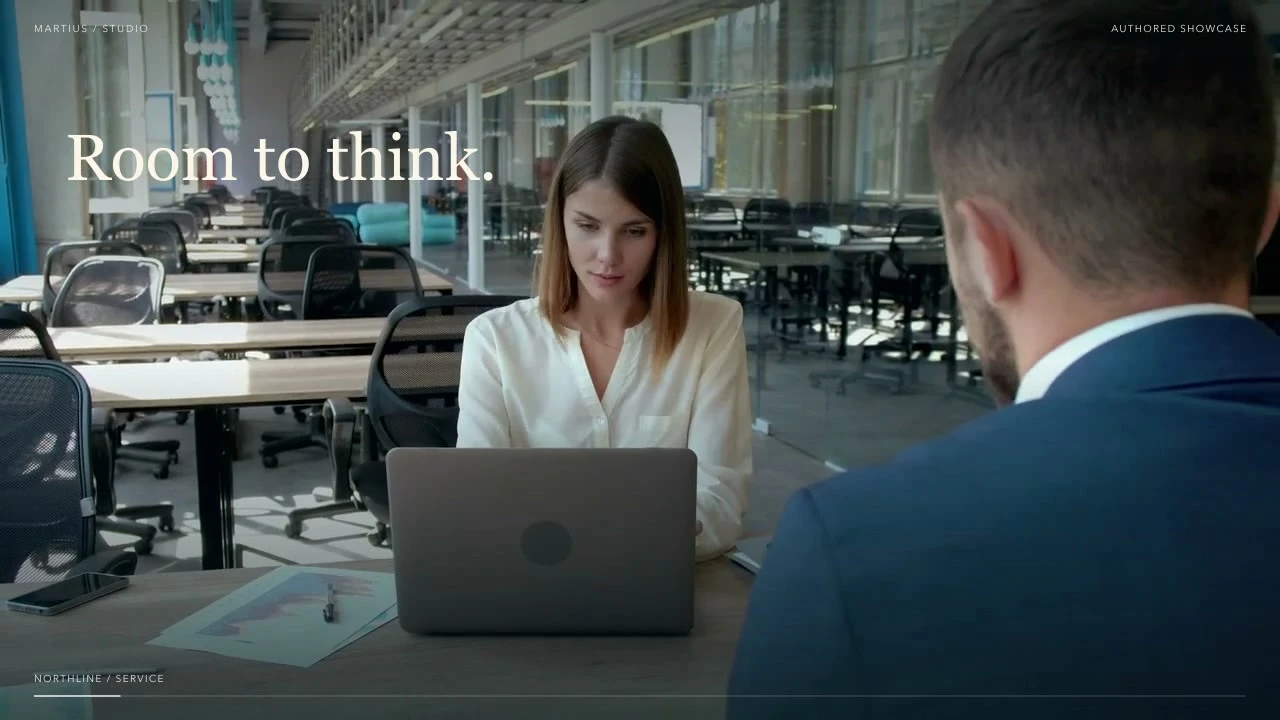
A service story needs a visible task. Show the environment, the action and the result the audience can inspect. A software film should establish why the interaction matters before asking the viewer to follow an interface.
These authored examples explore production treatments and working contexts. Use Martius desktop capture to record supported software workflows and connect the clips to editable scenes, narration and review. The examples have their own source records and do not claim customer outcomes.
What to bring to the brief
Approved recordings or footage of the real work
A controlled demonstration environment with suitable data
Verified product scope and a named buyer question
The current workflow and its review criteria
What needs review
Identify illustrative interfaces and sample data
Verify that the sequence reflects actual product behaviour
Keep customer claims tied to authorised evidence
Check the handoff and next step
These are authored studio examples. Each watch page identifies its production method, sources and illustrative scope; the collection does not claim customer relationships or measured business outcomes.
Questions, answered
A few things to know.
How should a software sales demo begin?
Begin with the buyer’s task and the part of the product that can answer it. Use a controlled recording with appropriate sample data, then show the result clearly enough to review.
How do I use these service films as a production reference?
Inspect the brief, source materials and scene sequence on each watch page, then use your actual product footage and approved facts in Martius. The films are authored creative references; the product and capture documentation explain the Agent workflow.
What should a service video revision preserve?
Keep the approved task, source evidence and useful creative decisions together. Identify the changed message and its appearances before making a new version, then compare the result with the approved reference.
 Videos play silently when visible. Tap the film or press Space while it is focused to pause or resume. Sound starts only when you enable it.