The brief
Introduce the difference between a device principle and the approved instructions for a specific device, without giving clinical or operational instructions.
Audience: training teams, technical reviewers and process owners creating a concise medical device team orientation film.
The visual approach
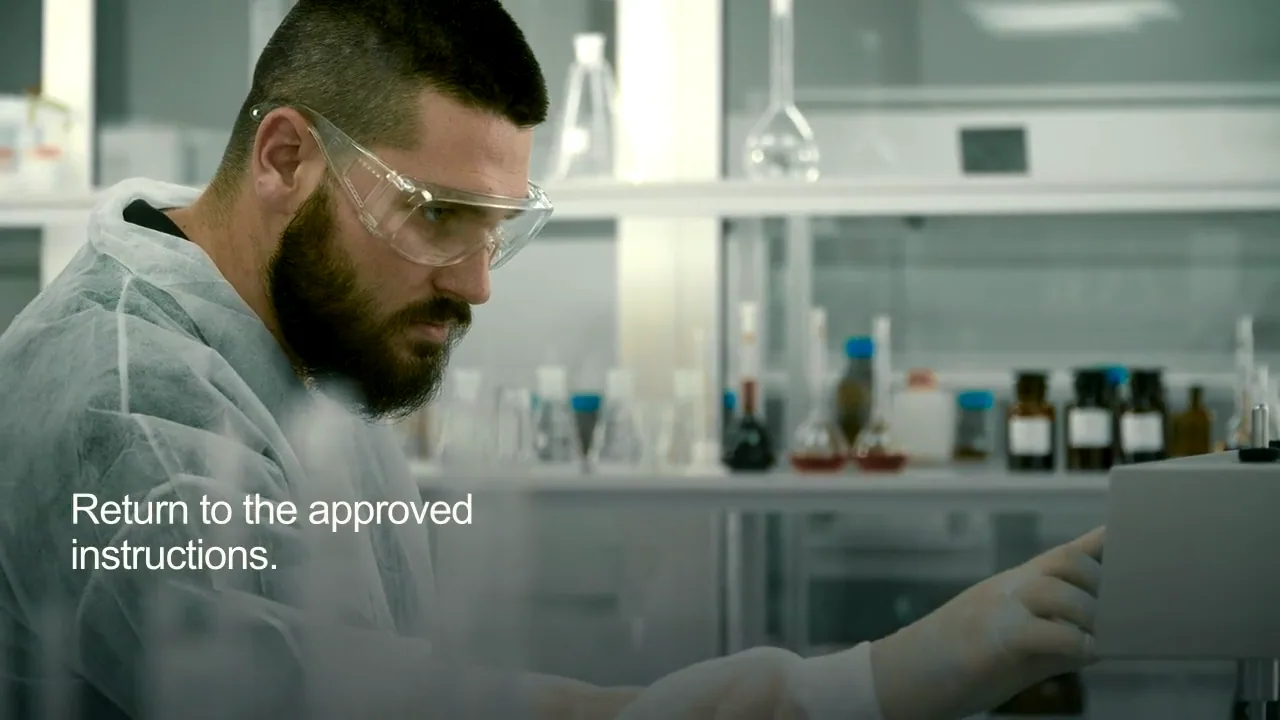
00–06s: A conceptual ultrasound transducer emits wave fronts. 06–12s: A stylized magnetic spin field moves in dimensional space. 12–18s: A real laboratory instrument setting grounds the transition. 18–24s: Outgoing waves and returning echoes close the conceptual view.
The science composition uses a 72 BPM rhythm selected for this storyboard. On-screen words stay short so the medical device team orientation imagery carries the sequence.
Review and editable scope
A real production brief would keep the medical device team orientation subject, source attribution, exact narration and caption wording available for review. A subject specialist must approve the factual explanation before using it in a real lesson.
The studio production plan keeps the four shot selections, crop, title, narration, captions and sound design separate. These notes document how this authored film was made. Use the Martius feature documentation for the product editing and review workflow.
Sources and interpretation
The schematic MRI and ultrasound visuals are not device recordings. Laboratory stock does not demonstrate an approved medical device. No patient, diagnosis, treatment or operating procedure is presented.
The linked FDA: medical device educational resources resource supports the conceptual topic. Stock subjects are illustrative and are not Martius customers, endorsements or evidence of a named facility’s practices. Original illustration is marked as conceptual wherever its appearance could be confused with observed data.
Scene-by-scene transcript
00–06s — A conceptual ultrasound transducer emits wave fronts. On-screen text: Understand the principle.. Narration: A device principle helps explain what the equipment does. Original stereo score.
06–12s — A stylized magnetic spin field moves in dimensional space. On-screen text: Every model has its own limits.. Narration: The actual device has model-specific capabilities and limits. Original stereo score.
12–18s — A real laboratory instrument setting grounds the transition. On-screen text: Return to the approved instructions.. Narration: Approved instructions guide trained users of the actual equipment. Original stereo score.
18–24s — Outgoing waves and returning echoes close the conceptual view. On-screen text: Clinical decisions need professional review.. Narration: Clinical decisions need appropriate professional review. Original stereo score.
Words, sound and scene notes
- 00:00
- A conceptual ultrasound transducer emits wave fronts. On-screen text: Understand the principle.. Narration: A device principle helps explain what the equipment does. Original stereo score.
- 00:06
- A stylized magnetic spin field moves in dimensional space. On-screen text: Every model has its own limits.. Narration: The actual device has model-specific capabilities and limits. Original stereo score.
- 00:12
- A real laboratory instrument setting grounds the transition. On-screen text: Return to the approved instructions.. Narration: Approved instructions guide trained users of the actual equipment. Original stereo score.
- 00:18
- Outgoing waves and returning echoes close the conceptual view. On-screen text: Clinical decisions need professional review.. Narration: Clinical decisions need appropriate professional review. Original stereo score.