The brief
Introduce magnetic alignment, radiofrequency excitation and returning signal without showing a patient or interpreting a scan.
Audience: educators, technical communicators and subject specialists creating a concise mri and medical imaging film.
The visual approach
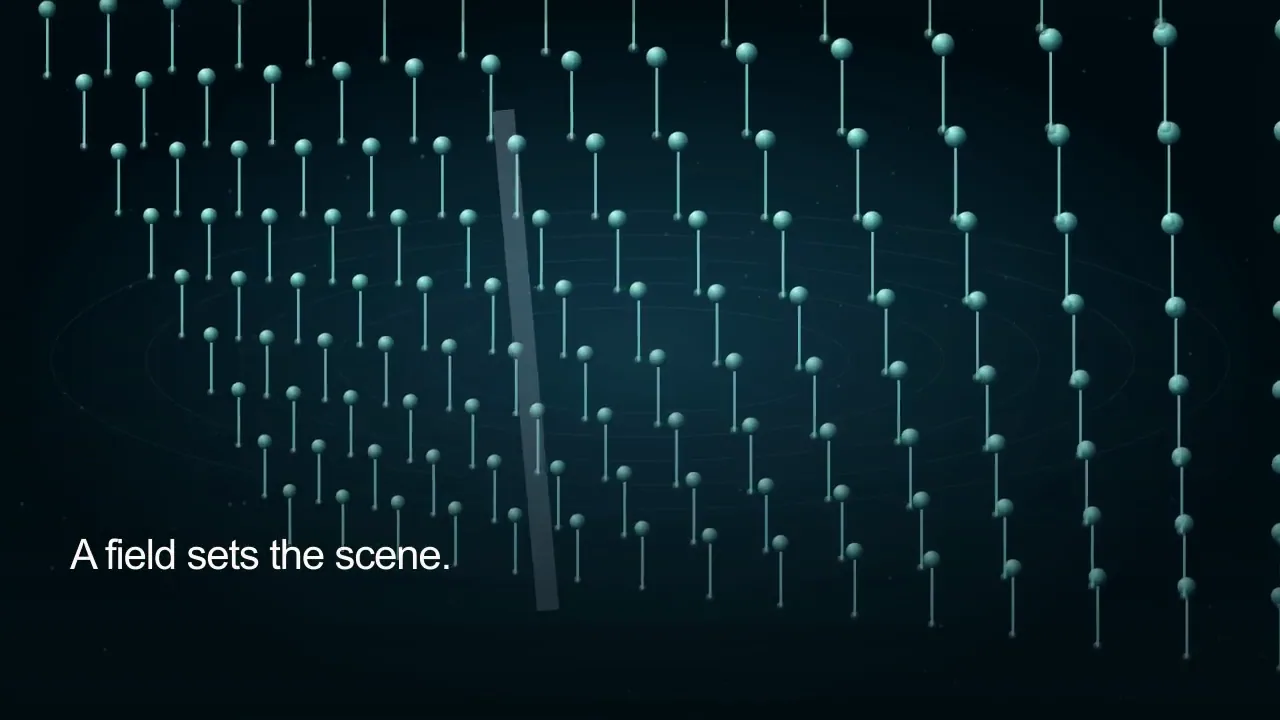
00–06s: A dimensional grid of luminous spin markers fills the frame. 06–12s: The projected arrows tilt and precess across the field. 12–18s: The tilt gradually reduces while a light sweep crosses the array. 18–24s: The camera pulls across the aligned field, without depicting a diagnostic scan.
The airy composition uses a 68 BPM rhythm selected for this storyboard. On-screen words stay short so the mri and medical imaging imagery carries the sequence.
Review and editable scope
A real production brief would keep the mri and medical imaging subject, source attribution, exact narration and caption wording available for review. A subject specialist must approve the factual explanation before using it in a real lesson.
The studio production plan keeps the four shot selections, crop, title, narration, captions and sound design separate. These notes document how this authored film was made. Use the Martius feature documentation for the product editing and review workflow.
Sources and interpretation
Stylized spins are enlarged conceptual markers. Motion, field geometry and timing are illustrative, not a scanner simulation or clinical teaching protocol.
The linked NIH / NIBIB: magnetic resonance imaging resource supports the conceptual topic. Stock subjects are illustrative and are not Martius customers, endorsements or evidence of a named facility’s practices. Original illustration is marked as conceptual wherever its appearance could be confused with observed data.
Scene-by-scene transcript
00–06s — A dimensional grid of luminous spin markers fills the frame. On-screen text: A field sets the scene.. Narration: MRI begins with a strong magnetic field. Original stereo score.
06–12s — The projected arrows tilt and precess across the field. On-screen text: A pulse changes direction.. Narration: A radiofrequency pulse disturbs the alignment. Original stereo score.
12–18s — The tilt gradually reduces while a light sweep crosses the array. On-screen text: The return carries a signal.. Narration: Returning signals depend on the surrounding tissue. Original stereo score.
18–24s — The camera pulls across the aligned field, without depicting a diagnostic scan. On-screen text: Signals become an image.. Narration: These signals help construct an anatomical image. Original stereo score.
Words, sound and scene notes
- 00:00
- A dimensional grid of luminous spin markers fills the frame. On-screen text: A field sets the scene.. Narration: MRI begins with a strong magnetic field. Original stereo score.
- 00:06
- The projected arrows tilt and precess across the field. On-screen text: A pulse changes direction.. Narration: A radiofrequency pulse disturbs the alignment. Original stereo score.
- 00:12
- The tilt gradually reduces while a light sweep crosses the array. On-screen text: The return carries a signal.. Narration: Returning signals depend on the surrounding tissue. Original stereo score.
- 00:18
- The camera pulls across the aligned field, without depicting a diagnostic scan. On-screen text: Signals become an image.. Narration: These signals help construct an anatomical image. Original stereo score.